Today's Swing Signals, before the market open.
After each US close we chart every stock in the Dow, the NASDAQ 100 and the S&P 500 swing by swing, and publish the signals. Each comes with an entry and a stop. Read them by API, in a spreadsheet, or ask your AI assistant.
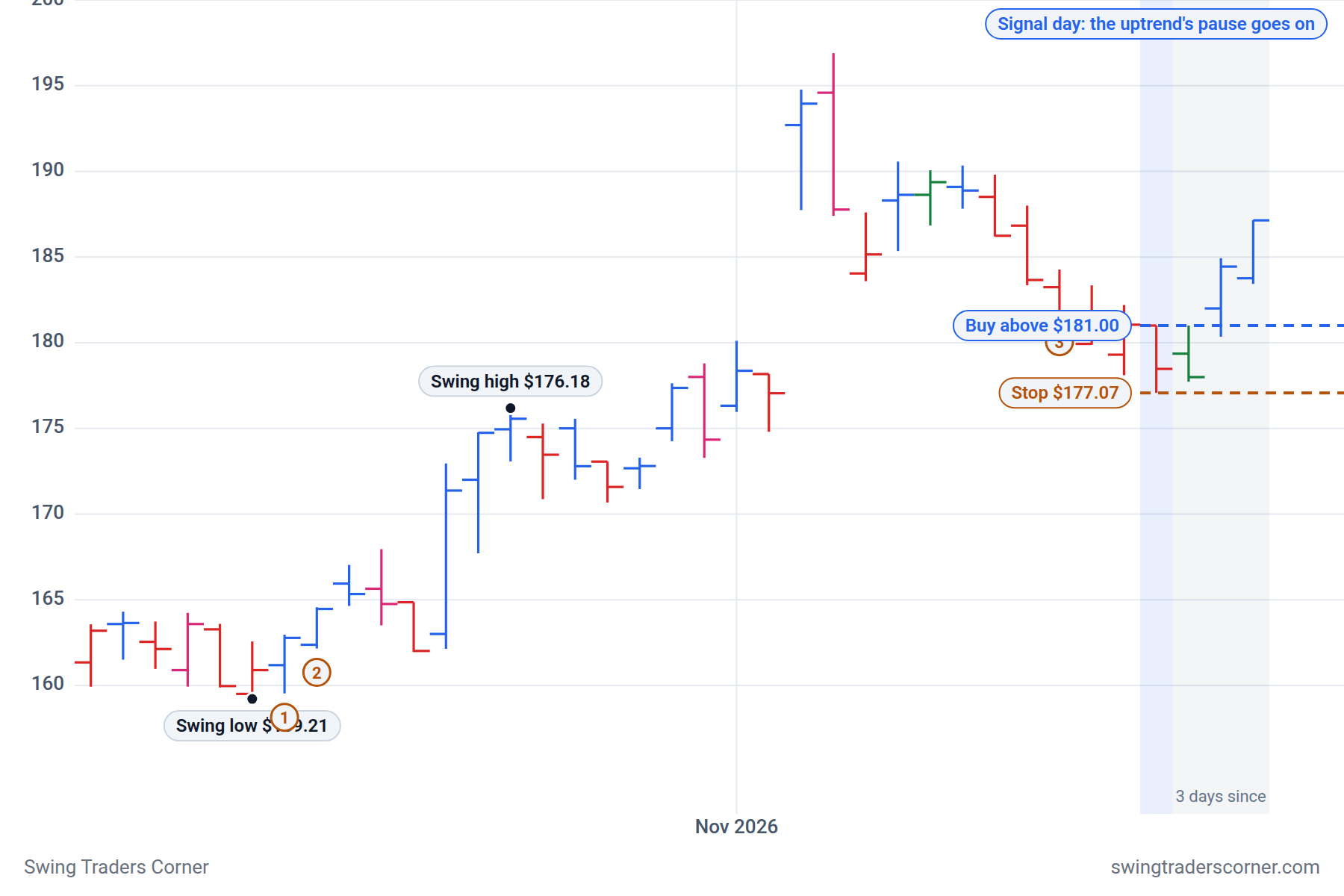
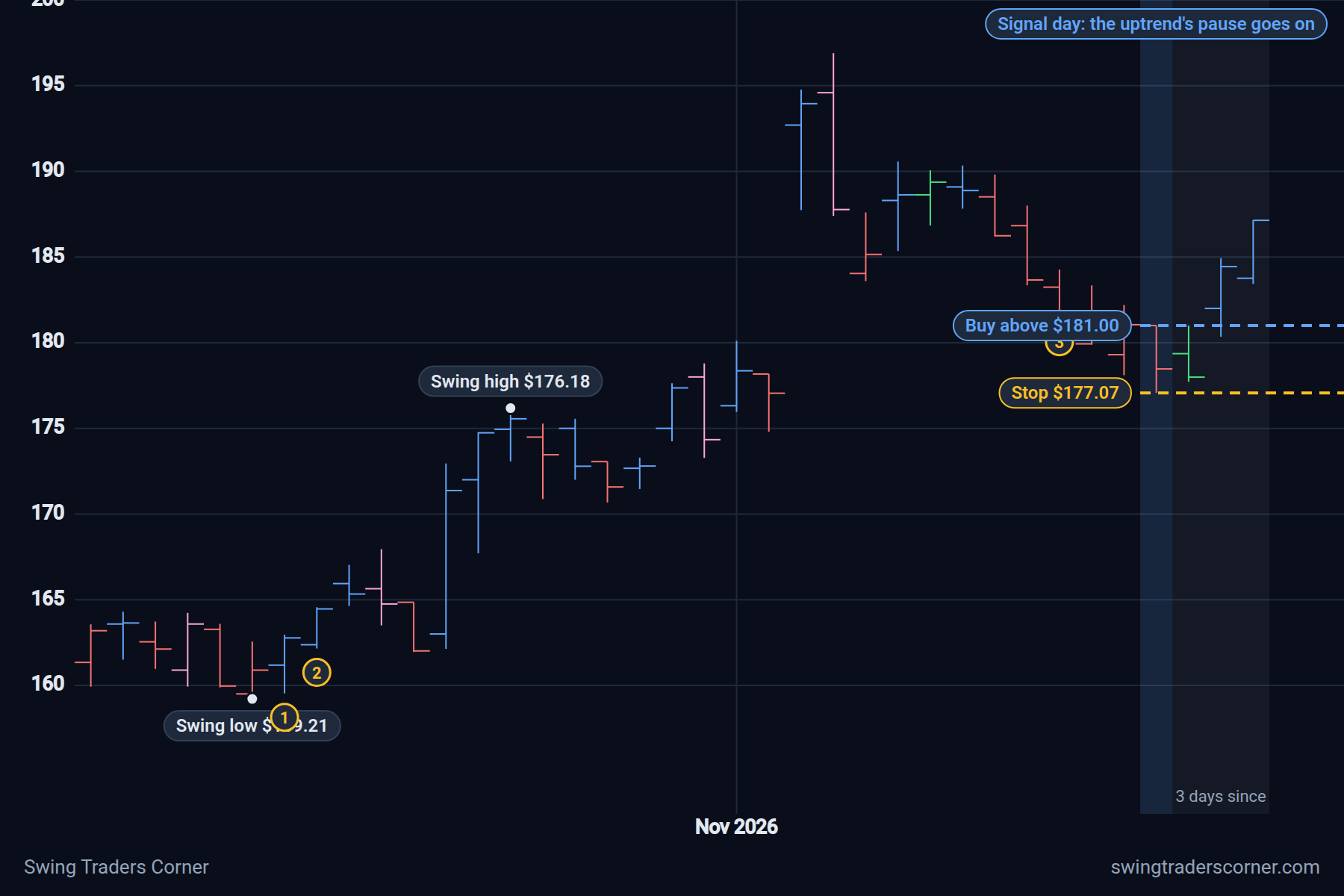
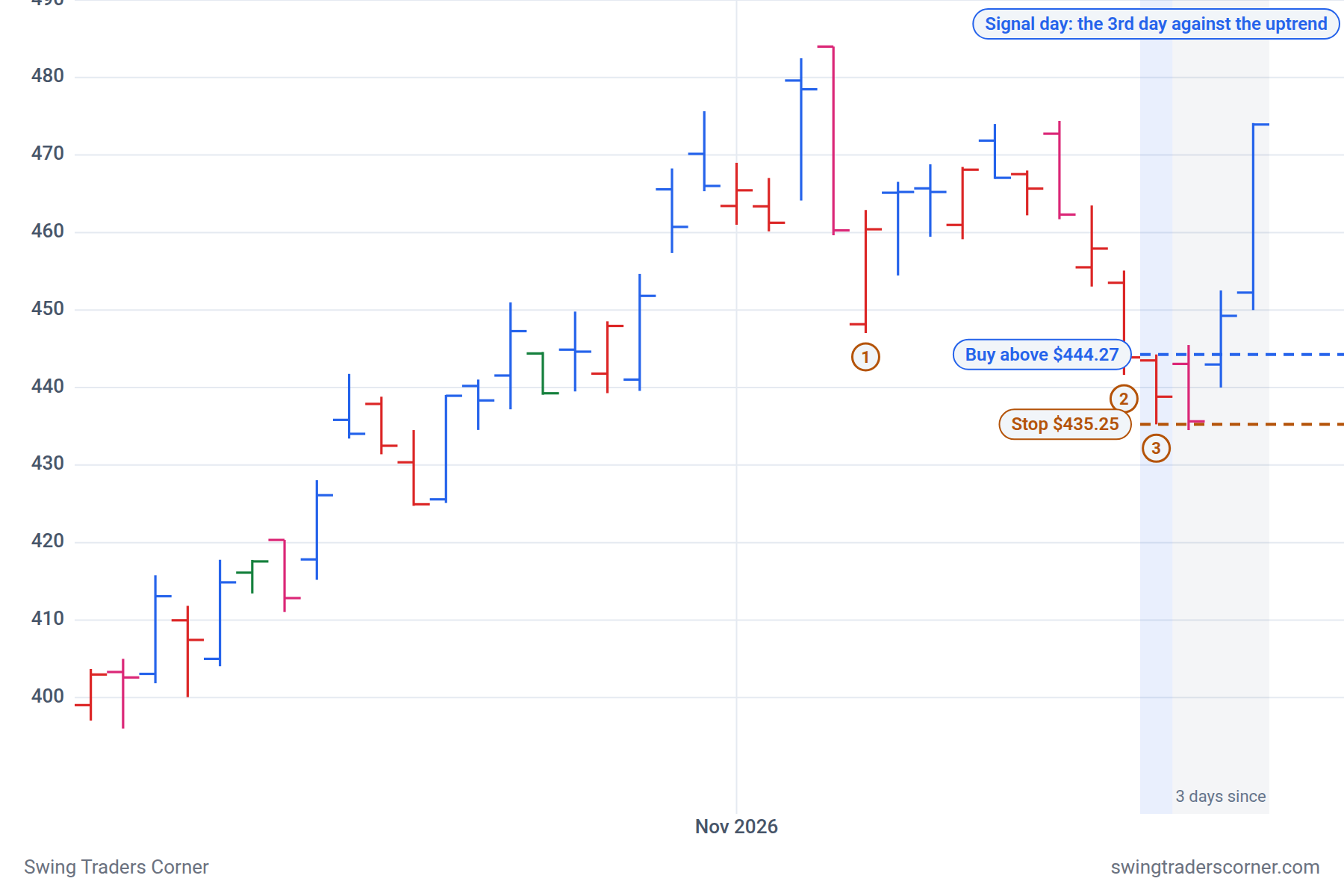
3M, 19 November 2026: the uptrend resumes after a dip. Buy at 181.00, stop at 177.07.
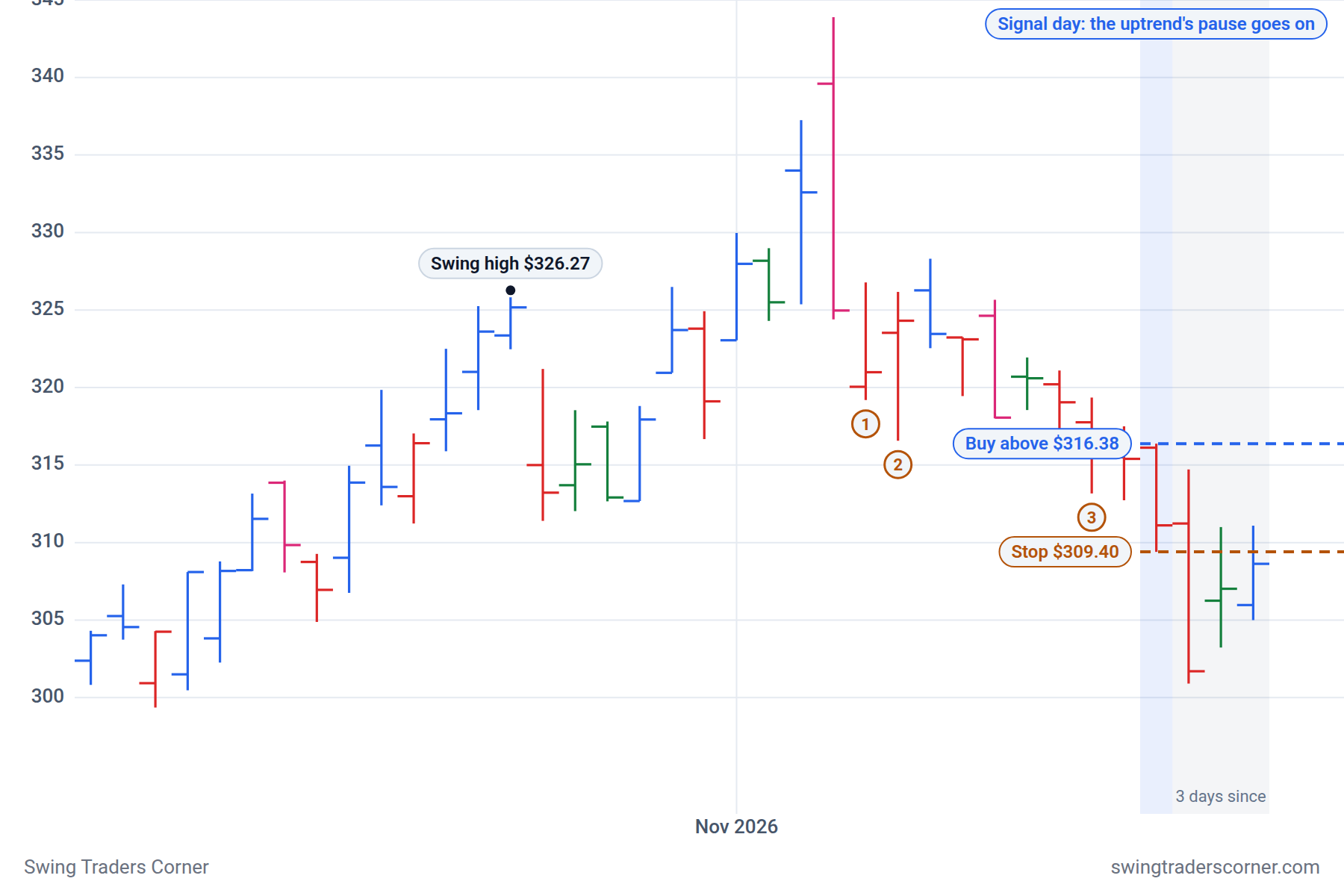
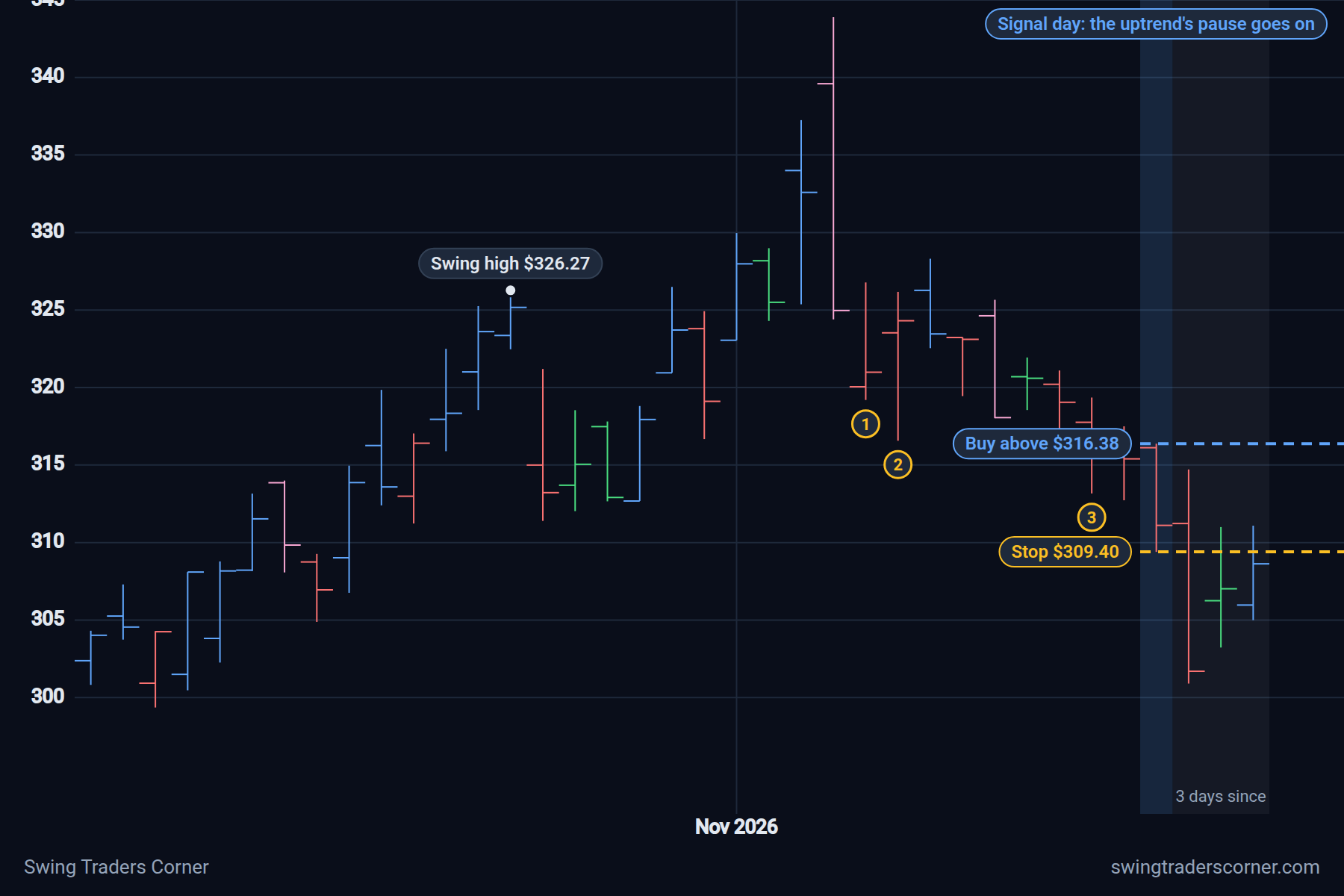
American Express, 19 November 2026: the uptrend resumes after a dip. Buy at 316.38, stop at 309.40.
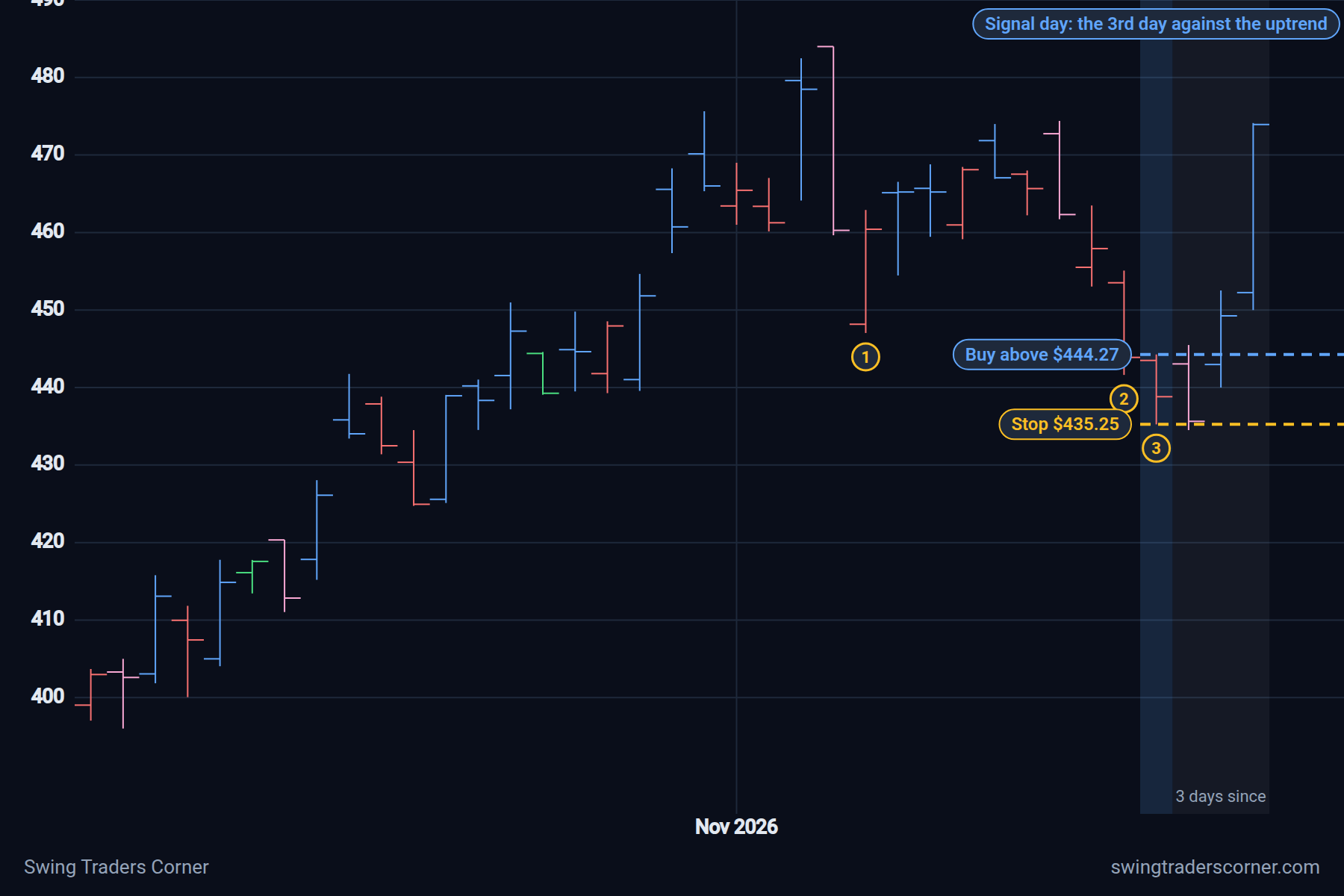
Amgen, 19 November 2026: the uptrend resumes after a dip. Buy at 444.27, stop at 435.25.
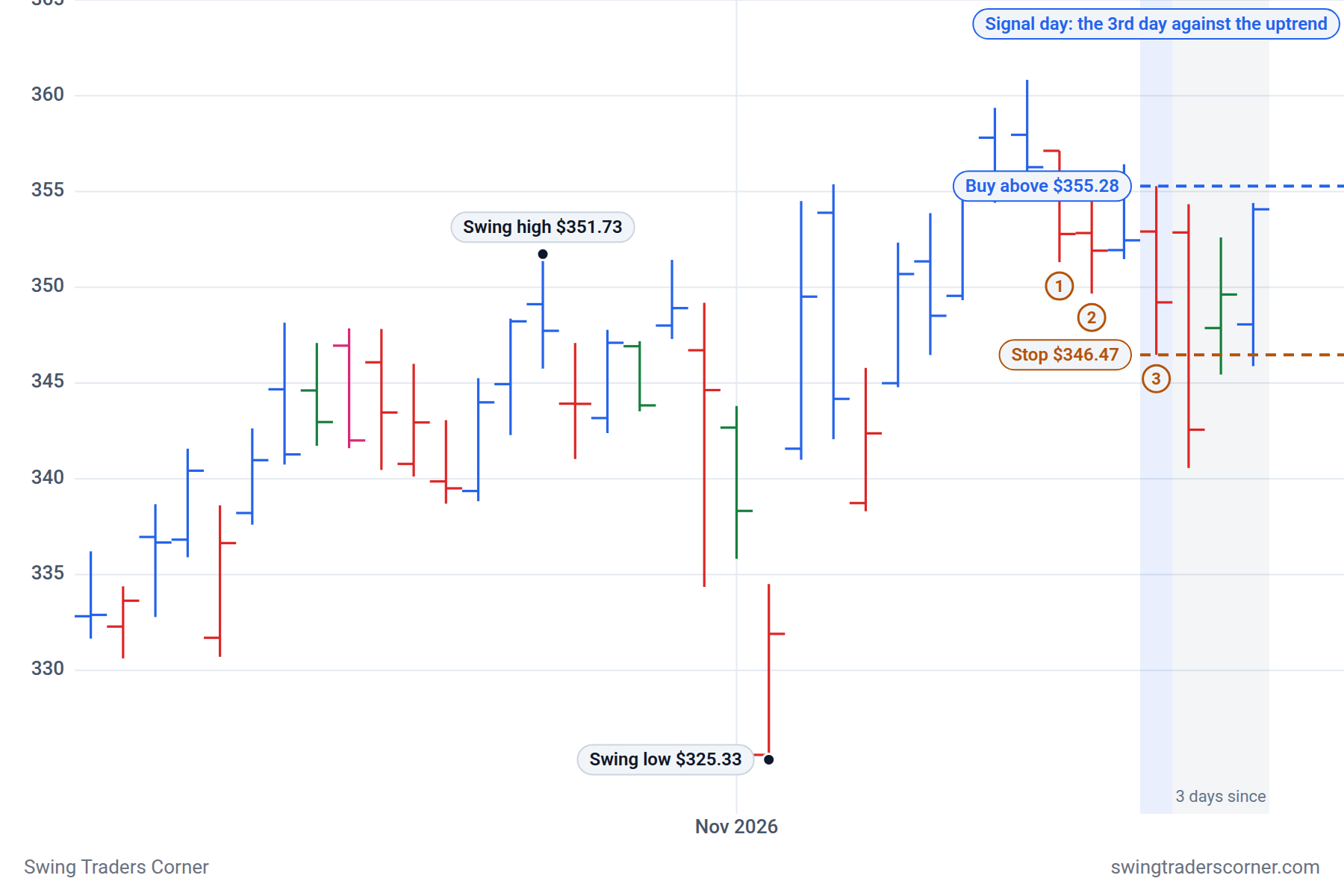
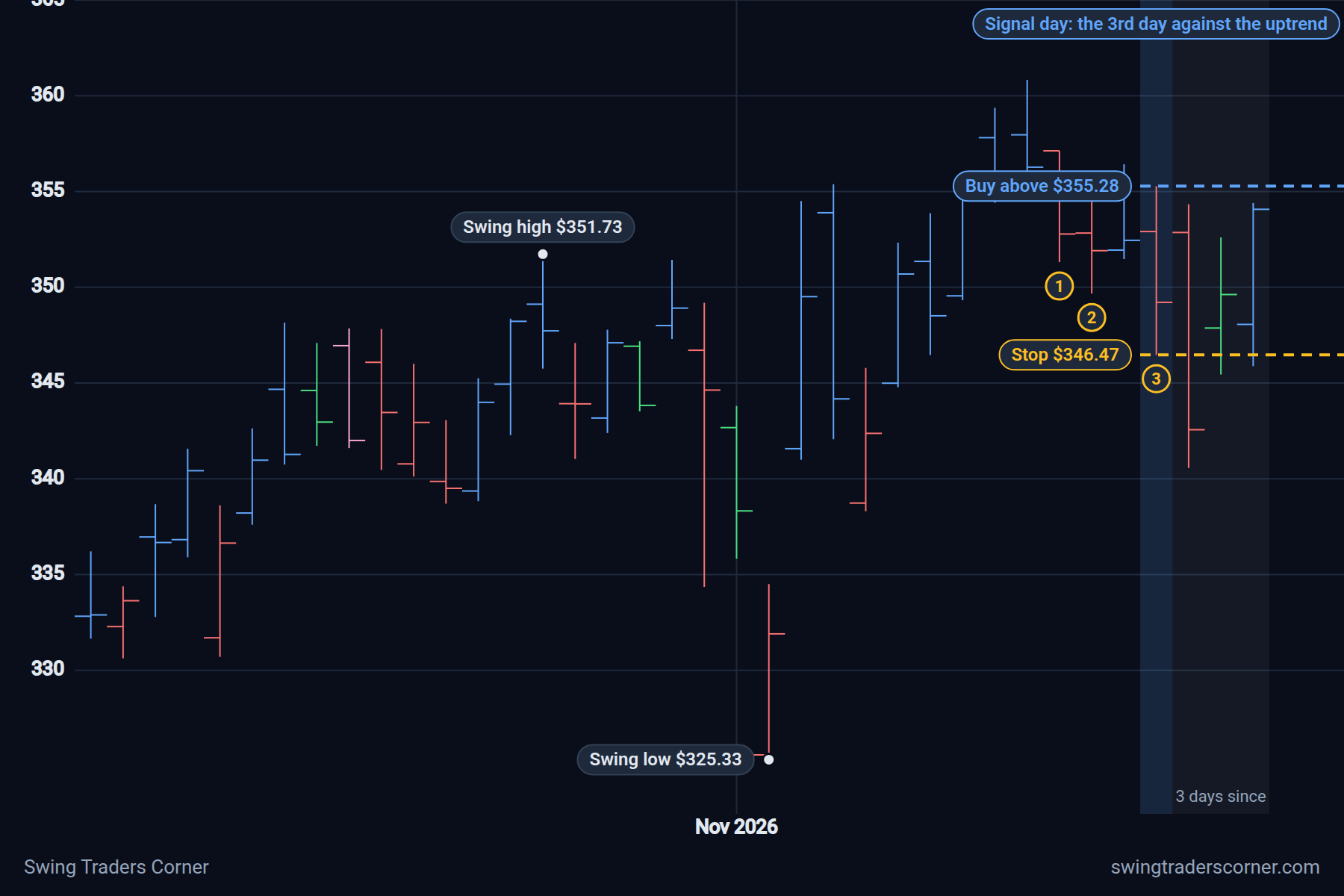
Apple Inc., 19 November 2026: the uptrend resumes after a dip. Buy at 355.28, stop at 346.47.
And 7 more free Dow signals from that day. Start free to see them all, by API, in a spreadsheet or from your AI assistant.
The free plan sees Dow stocks three trading days late. Tonight's edition has 22 signals across the US Large Caps plan, published the same evening. See the plans
Four signals, each with an entry and a stop.
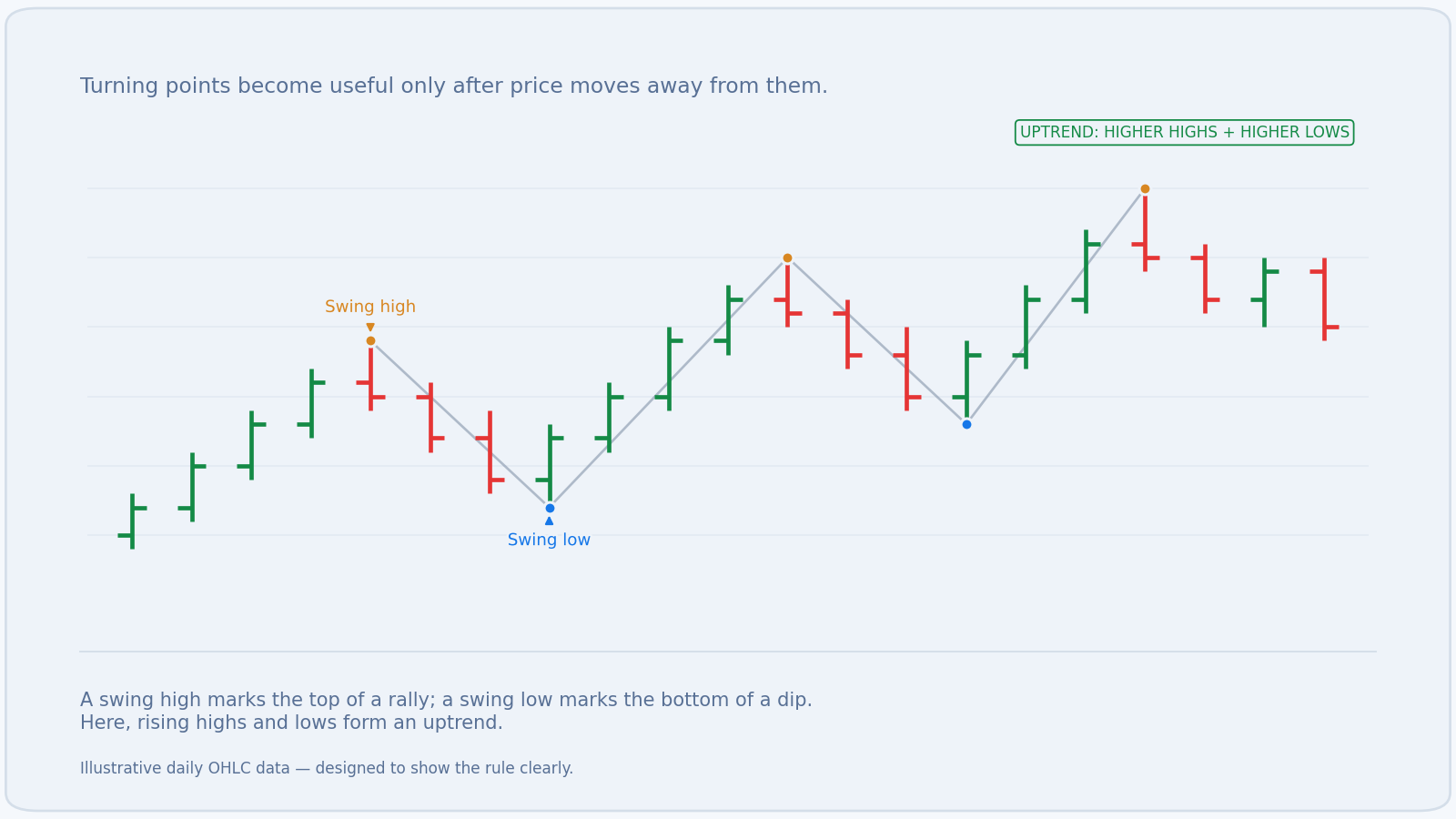
A swing chart follows the trend from swing to swing. Two signals say the trend has turned; two say it's carrying on after a pause. The entry is the level price has to reach next; the stop is the level that proves the idea wrong.
COTD2U Trend turns up
Price breaks above the last swing high, so the downtrend has ended. Buy at the swing high; the stop is below the downtrend's latest low.
COTB Continuation buy
The trend is up and price dips for three days. Buy above the last day's high; the stop is below its low.
COTU2D Trend turns down
Price breaks below the last swing low, so the uptrend has ended. Sell at the swing low; the stop is above the uptrend's latest high.
COTS Continuation sell
The trend is down and price bounces for three days. Sell below the last day's low; the stop is above its high.
Illustrations. Swing signals, in the Learn course, follows each one on a real chart.
The same published signals in your AI assistant, your spreadsheet or your own code.
Your AI assistant
Through our MCP server: Claude, ChatGPT, Claude Code, VS Code or Cursor.
Google Sheets
One formula, refreshed each evening.
API
JSON, with your key in one header.
{
  "tidm": "MMM",
  "signalType": "COTB",
  "buyAt": 181,
  "stopAt": 177.0711
}
Charts
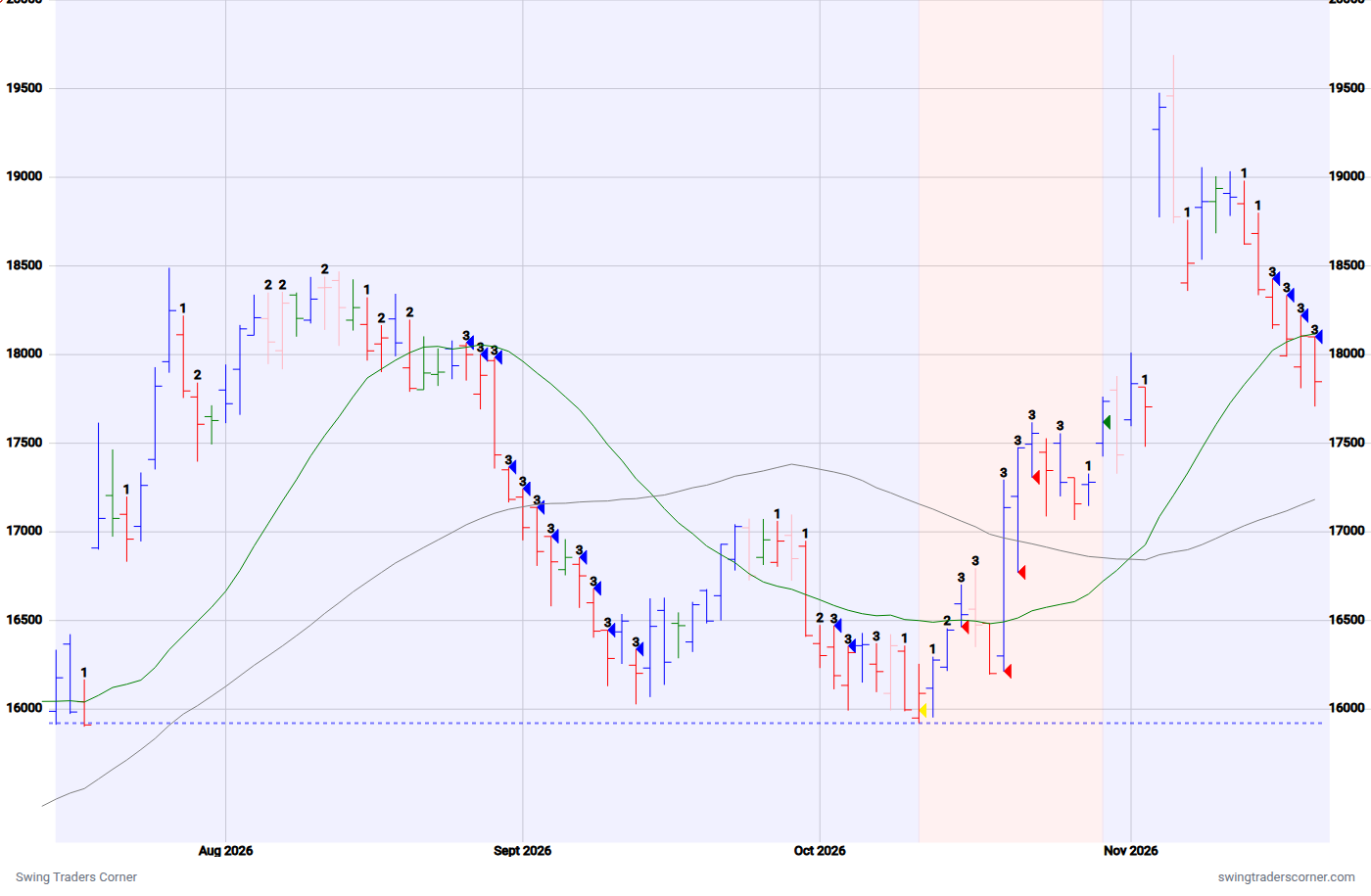
Each paid signal has its swing chart, by link or in the conversation.
New to the API? The Quickstart has the whole Sheets script, Python and curl.
Ask your AI assistant for tonight's signals.
Swing Traders Corner has an MCP server, so an assistant that speaks the Model Context Protocol can read the published signals and charts for you. Add one address, sign in once, and ask in plain English. It reports what we published; it never asks for your positions or your money.
https://swingtraderscorner.com/v1/mcp
All the setup steps · Every plan works in your assistant, at the same price.
get_latest_signalsThe latest scan, by index, ticker or signal type.
get_active_signalsEach stock's current signal, optionally since a date.
get_signal_chartThe swing chart, shown in the conversation.
get_signal_historySignals as they were issued, over a date range. Paid plans.
find_instrumentsTurns "Alphabet" into GOOG and GOOGL.
get_my_planYour plan, its limits and this month's use.
Learn the method first. It's free.
Five short pages, drawn on real charts, with the drawbacks as well as the wins.
Pick the stocks you follow.
Free sees the Dow three trading days late. Paid plans get signals the same evening, with history and charts. Every plan works in your AI assistant. A 14-day US Large Caps trial is free to start from your account, with no card.
- The NASDAQ 100's stocks
- Same-evening signals
- History and charts
- Dow, NASDAQ 100 and S&P 500
- Same-evening signals
- History and charts
A method, not a promise
Some signals follow through and some don't, and nobody can tell in advance which. The method pays only if the winners run further than the losers. Signals are published, impersonal information, not advice.
Paid plans open once payments are set up: everyone starts on Free, and nothing is charged until then. Prices in US dollars. Stock counts are today's index members.
Common questions
When are signals published?
After the US close, once the day's prices are checked. Your account page shows when tonight's signals went out.
Why is the free plan three trading days late?
So the signals can be seen, and how they played out, before anyone pays. Paid plans get them the same evening.
Can I ask an AI assistant for the signals?
Yes. Connect Claude, ChatGPT, Claude Code, VS Code or Cursor to our MCP server and ask in your own words, such as "which Dow stocks have a buy signal today?". It sees exactly what your plan includes, on every plan. How to connect it
Can I cancel a paid plan?
Yes, any time from your account page. The plan runs to the end of the period paid for.
Can I sign up from my country?
Sign-up is open in the United Kingdom. Rules on publishing trading signals differ by country, so we open each one once we've checked them. If yours isn't open yet, sign up anyway and we'll put you on the waiting list.
Where do the prices come from?
End-of-day prices from commercial data providers, cross-checked before signals are calculated. The Docs will list the providers.
Where does the method come from?
From W.D. Gann's swing charts, as amended by Marc Rivalland in his book Swing Trading. The Learn course explains the rules with real charts.